From Television Schedules to the On-Demand Shelf
Television schedules to on-demand shelves changed who sets the viewing time. Learn how to choose between a live channel, catch-up service and library.
Television schedules to on-demand shelves changed who decides when a programme begins. A channel once set the hour; a streaming library lets you request an available title, while live channels and catch-up services keep parts of the older arrangement in view.
The change is not simply from one screen or delivery method to another. A schedule presents a sequence chosen by a broadcaster, while an on-demand catalogue asks the viewer to choose a title. Each format gives the viewer a different role, and neither suits every kind of programme or viewing occasion.
A television schedule set the order and the hour
A broadcast schedule lists programmes by channel and transmission time. Viewers could switch channels, but a particular programme began when the broadcaster placed it in the schedule. Watching it live meant joining at that time; seeing it later depended on recording or a later service, if one was available.
The schedule also made decisions on the viewer’s behalf. A broadcaster arranged what came before and after a programme, so a viewer who tuned in for one show might encounter the next without choosing it. That sequence could introduce unfamiliar programmes, though viewers remained free to change channels or switch off.
Because a programme had a known slot, the schedule could create a common reference point. People watching at the same time could discuss what had just aired. It did not mean everyone watched, but it gave viewers a shared moment to refer to.
An on-demand library gives viewers a different starting point
An on-demand service lets a viewer select an available programme and start it outside a fixed broadcast slot. Depending on the service, playback controls may allow pausing, resuming or moving between episodes. The central distinction is that the viewer requests a title from a catalogue rather than joining a channel’s current transmission.
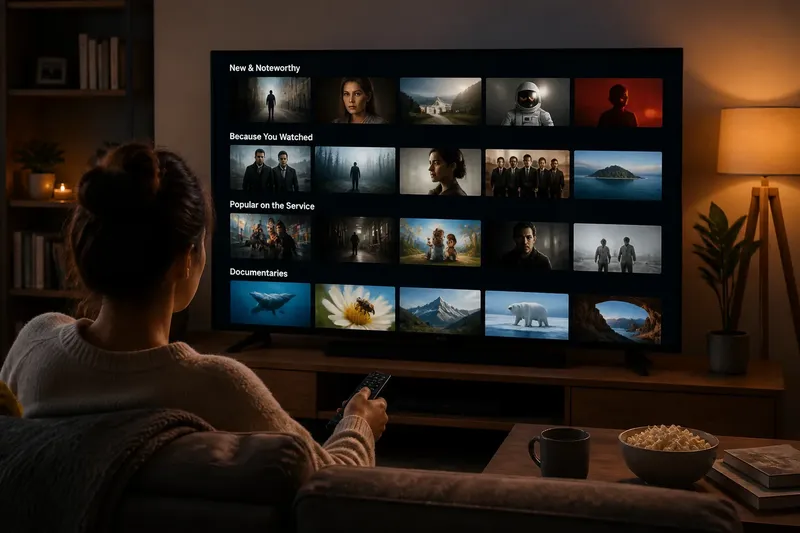
This changes what the viewer must decide. Instead of checking what is on now, the viewer searches or browses for a programme, chooses when to begin and may select what to watch next. The catalogue can offer flexibility, but it does not remove the choice-making that a channel’s sequence once handled.
Availability has limits. A programme may be absent from a service, or leave its catalogue; access can also depend on the account or platform. “On-demand” means choosing a start time for content the service makes available, not having access to every title at all times.
Schedules and libraries shape discovery differently
A schedule offers a ready-made sequence. A viewer who turns on a channel without a particular title in mind can see what the broadcaster has arranged and might stay for an unexpected programme. In a library, discovery begins with the catalogue’s browsing and search options, and the viewer chooses where to look.
Neither arrangement guarantees discovery. A channel’s sequence may not suit a viewer’s interests, while a catalogue can feel difficult to browse if the viewer has no title in mind. The practical difference is who assembles the next option: the broadcaster lays out a sequence, whereas the viewer selects from what the service presents.
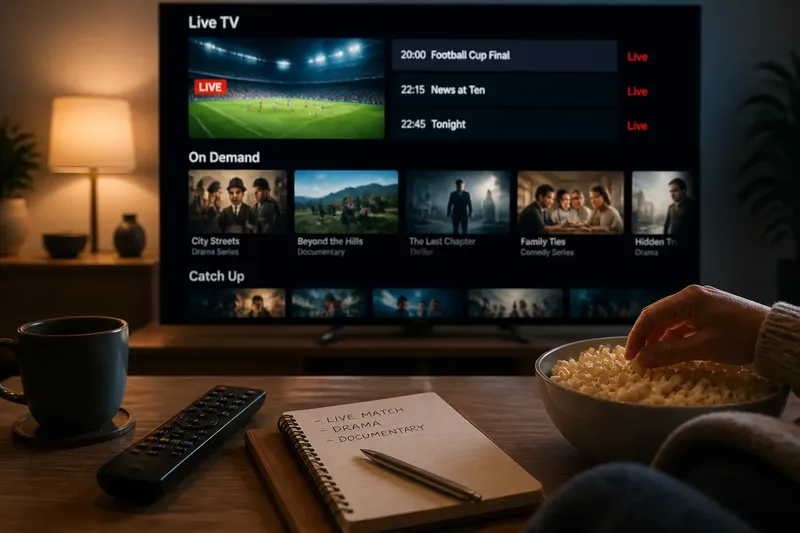
Many platforms combine these formats. A streaming app may offer live channels, a catch-up section and an on-demand catalogue on the same screen. Check whether you have selected a live stream, a replay or a library title: each can have different availability and viewing conditions.
Live broadcasts still make timing part of the programme
Some programmes depend on following events as they happen. A live news broadcast, match or public event has a particular value in its original moment, so its scheduled start is more than a convenient slot. A later replay may show the same material, but it cannot recreate the experience of watching the event unfold live.
For programmes that are not time-sensitive, a later start may make little difference to the content. A drama episode or recorded documentary can often be watched after its original transmission if a service makes it available. The choice between live and on-demand viewing therefore depends partly on whether the timing itself matters.
Choosing a schedule or an on-demand library starts with the occasion
Start by identifying what you want from the viewing moment. Choose a live channel when following an event as it happens or sharing a scheduled programme matters. Look for an on-demand version when you want to select a particular available title without joining its original broadcast time.
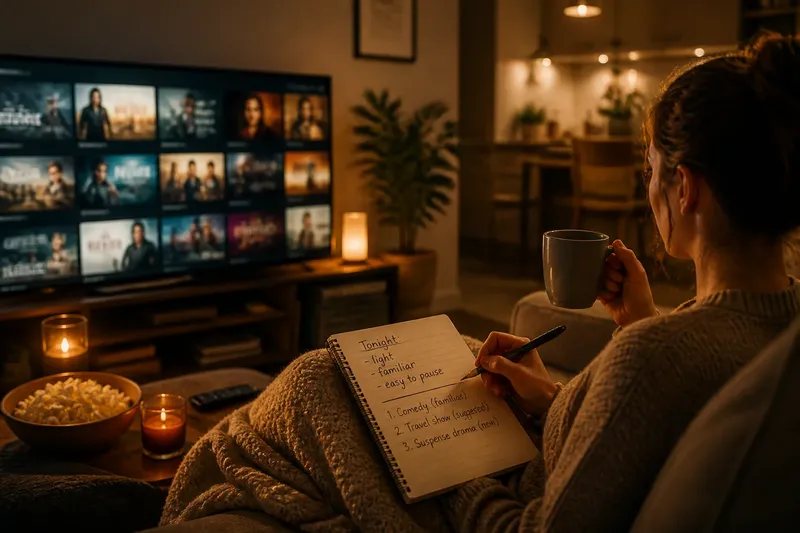
Then consider how much direction you want from the service. A schedule supplies an order and a clear answer to what is on at that moment. A library gives you more say over the title and start time, but asks you to make those selections yourself.
For a household, the format also affects how people coordinate. A scheduled programme requires agreement about being ready at its broadcast time. An on-demand title allows viewers to choose from the service’s available options, but they still need to agree on what to watch and whether to view together.
Say you want to follow a live cup final but also plan to watch a drama later. You check the app and see the final listed as a live channel, while the drama appears in the on-demand catalogue. You choose the live stream for the match, then select the drama from the library when you are ready; the observable result is that the event is watched as it unfolds and the drama is not tied to its broadcast slot. If the drama is absent from the catalogue, the trade-off is to check the broadcaster’s catch-up service or wait for another legitimate availability option.
What is not worth the effort is trying to make every programme fit a rigid viewing system. It is usually enough to decide whether the occasion calls for a shared live moment or a title you can request from a library, then check which service actually offers it.
Questions viewers ask about television schedules and on-demand viewing?
Can I watch a scheduled programme later?
Possibly: a broadcaster may offer a catch-up replay, or a recording service may have saved the transmission. Check the relevant channel or service, since later availability varies by programme and platform.
Does on-demand mean every programme is available whenever I want?
No. It means you can choose when to start a title that the service currently offers. Search the platform’s catalogue, and if the title is missing, check whether the broadcaster provides a separate catch-up option.
Why do live programmes still have fixed start times?
For live content, watching at the scheduled time lets viewers follow an event as it unfolds. A replay can provide access later, but it is no longer the same live moment.
Can one platform offer both live and on-demand viewing?
Yes. A service can combine scheduled live channels with replays and a selectable catalogue. Look at the label beside the programme to tell whether you are joining a live transmission, opening a replay or requesting an on-demand title.
The shift moved some choices from broadcaster to viewer
Television schedules to on-demand shelves changed how programmes are arranged and who chooses when to watch. Schedules still help viewers follow live events and encounter a broadcaster’s sequence; libraries let viewers select a start time for titles that are available. Knowing which format you have opened makes its limits clearer, as well as the choices it puts in your hands.